
Introduction — Frustration and Flow in the Context of Learning
In music learning, whether it’s making the first steps on the instrument or mastering some complicated compositions, everything depends on the emotional background. Haven’t you repeatedly encountered this feeling when, in spite of your diligence, nothing seems to go right? Frustration — that is, an inner tension state emerging due to a gap between expectations and actual results. In contrast stands the flow state, a maximally engaged harmonious immersion in the process, where time seems to slow down while learning is easy and performed with pleasure. With instant feedback and real-time insights in the Talented app, practice flow accelerates improvement through adaptive feedback, error correction, and a tighter feedback loop in line with learning psychology.
- The feeling of frustration appears when a lack of control feeling and the inability to predict feedback arise.
- Flow — the outcome is determined by a balance between the level of task difficulty and the level of student skill, information about their actions being clear and timely.
What is understood is that in the world of mobile applications for learning music, it is precisely immediate feedback that can become the key to transitioning students from the frustration zone into the state of flow and stable motivation. This shift supports practice efficiency, correction guidance, engagement increase, performance boost, and momentum toward skill mastery. For those seeking structured tools, try the best online music learning app today.
Mechanisms of Instant Feedback and Its Role in Emotional Experience
Why is it so important that the feedback be immediate? So arranged are our brain mechanisms, that:
- Immediate reaction — an immediate reward, building up positive experience.
- Quick error correction — this speeds up the process of learning while at the same time minimizing incorrect pattern fixation.
- Motivation support — owing to the immediate evaluation of actions, concentration and interest are preserved.
Below is a diagram showing how feedback timing can affect emotional response and the speed of material acquisition:
| Feedback Timing | Emotional Response | Influence on Learning |
| Instant | Delight, excitement, confidence | Rapid adaptation and growth |
| Delay (several hours/days) | Frustration, doubts, loss of motivation | Slowed progress, loss of interest |
Using the visual and audio responses provided within the scope of an application, immediate feedback is going to notify the user about the success of performance and create positive reinforcement through it. Every practice session turns into a dynamic and inspiring journey where the user feels not just a student but a real creator of the musical way. Session analytics and improvement metrics strengthen cognitive flow and sustain a motivation boost.
Why a Delay in Feedback Causes a Decrease in Motivation and Effectiveness
- Feedback given late loses its power and potential to stimulate development.
A time gap between action and reaction directly influences the emotional background and productivity of the learner. The main reasons why delayed feedback might affect motivation and effectiveness are discussed below.
- Reducing the association between behavior and outcome
When the feedback is closer in time to the action itself, the cause-and-effect link is more tangible and clear. Delay blurs the connection and the learner stops seeing precisely why praise or criticism was received. Intrinsic motivation to work as required decreases as a result. - Heightened feelings of uncertainty and frustration
Anxiety and confusion are produced by the lack of responses in due time. On the other hand, constructive understanding of mistakes transforms into internal discomfort and often develops into emotional burnout. - Decreasing promptness of correction
The timely correction of behavior, improvement in techniques, and avoidance of reinforcement of mistakes require speedy feedback. Delayed feedback prevents immediate correction, which in turn makes it take longer to reach mastery. - Reducing the feeling of progress
A consistent feeling of attainment and development is formed by regular, clear signals about achievements. Falls motivation when these signals are delayed, for the recognition of efforts is not felt by the person. - Decreasing the level of engagement
The interaction dynamics between instructor and learner is reduced by delayed reactions. It alienates the latter from the process and makes them passive observers.
Hence, a delay in feedback isn’t just a time lag but an obstacle of substantial magnitude to sustaining inner drive along with high productivity. The key elements of immediate feedback are helping sustain motivation, keeping learning effective, generating positive emotions, and building effective habits. The approach of reducing uncertainty zones and clearing the “gap” that happens between effort and reward will make the learning process more engaging and productive. Real-time insights and instant feedback in tools like the Talented app directly serve practice flow and continuous improvement.
Practical Examples — How Instant Feedback Transforms the Skill Acquisition Process
Not just convenience, instant feedback is, in fact, a true catalyst for deep change in learning. Consider particular scenarios where instant feedback, instead of merely accelerating progress, also makes the relation of the learner to the subject far stronger.
- Language learning — a student practices the pronunciation of some new word. When the system or teacher immediately corrects accent and intonation, the learner instantly feels the correctness of the sound and can repeat it with improvement. The absence of delay allows the avoidance of fixation of errors at the muscular memory level.
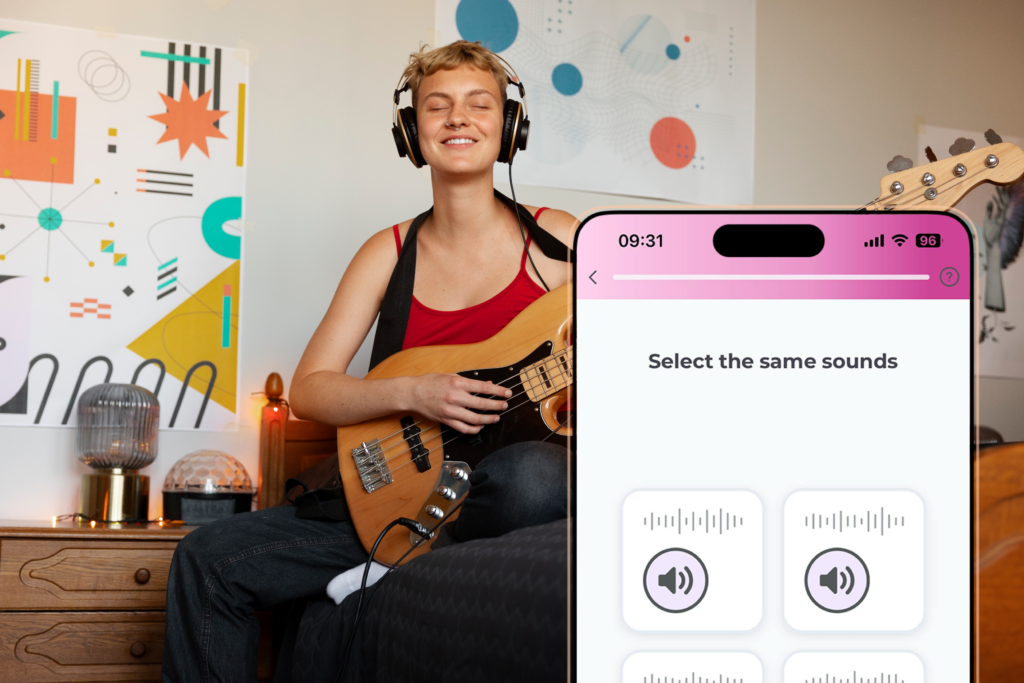
- Musical instruments — if a beginning piano player receives immediate feedback on wrong key touches or inaccuracy in rhythmics, problematic spots are noticed and corrected right away. Otherwise, the mistake is saved in memory and then turns into a habit that is difficult to correct later on.
- Programming — in the writing process, it is important to instantly see the result or compilation error. Instant-response tools expedite the discovery of syntactic inconsistencies and logical errors, reducing frustration and increasing confidence.
Instant feedback acts in each of these examples — linguistic, musical or technical — as a “compass” showing the right direction and not allowing bugs to build up.
The advantages of practical use of instant feedback can be summarized as:
- Reducing frustration — the sooner the mistakes are corrected, the lower the level of uncertainty and disappointment.
- Raising engagement level — immediate response ignites interest and the desire to continue working.
- Accelerating learning — mistakes are weeded out “on the fly” which results in speedier assimilation of material.
- Forming correct skills — timely corrections prevent the reinforcement of wrong patterns and habits.
Thus, instant feedback organizes the learning process not as some kind of “linear” path with delayed corrections, but as continuous movement toward perfection. A favorable environment is created by it where mistakes are perceived not as obstacles but as important landmarks on the way to mastery. Finally, practical examples of instant feedback confirm that such interaction really is able to turn the educational process from a tense struggle with difficulties into a harmonious flow state. Adaptive feedback, session analytics, and improvement metrics together drive performance boost and practice efficiency.
Technologies and Tools for Organizing Instant Feedback in Learning
Instant feedback has turned into an integral part of effective learning in the era of digital technologies. When creating a mobile application for the development of skills, selection of technologies capable of minimizing the delay between action and reaction was treated with care. Among the key tools are the following:
- Interactive simulators with adaptive difficulty — instant results and recommendations because they analyze users’ actions in real time and provide adjusted task levels. An approach like this is sure to ensure captivating learning and very little frustration.
- Voice and gesture recognition systems — not only visually, but considering intonation, rhythm, or movement accuracy, they allow evaluation of the correctness of exercises. Appearing literally after every step, feedback sharply reduces waiting time.
- AI assistant conversations — provide responses to questions on the spot, give hints, or encourage the continuance of the process of whatever is at hand — thus creating a personal mentor nearby effect, albeit in digital form.
- Behavioral analytics integration — identifies the difficulty zones and immediately provides corrective measures to the user.
Working with reaction time intervals presents a special challenge to the developers since a few seconds of delay can bring frustration back. Real-time insights, instant feedback, and the Talented app’s adaptive feedback keep the feedback loop tight, supporting practice flow and steady improvement.
Suggestions for Implementing Instant Feedback in Personal and Team Practice
A systemic approach is needed for the transition to practice with quick and clear response. In order to make learning productive and emotionally comfortable, pay attention to the following recommendations:
- Reduce the intervals between action and correction as much as possible — the longer it is, the larger is the possibility that motivation will be lost.
- Provide feedback with visual and audio signals — sometimes a bright indicator or a short sound signal will work more efficiently than any textual comments and immediately draw attention.
- Introduce gamification elements — online achievements, points, and ratings stimulate continuous engagement thanks to fast reflections on successes and mistakes.
- Feedback should be personalized — general comments are not very helpful when personalized advice for the individual will help get on the right track much quicker.
- Keep the attitude positive — negative feedback should be given with recommendations and encouragement for effort, so motivation does not decline.
Besides the technical side, developing a culture of instant feedback within teams — among colleagues or students — is necessary. Create a space where there is no room for fear of mistakes, and every response is viewed as a step toward improvement. Remember, it’s precisely timely and constructive feedback that reduces practice frustration and approaches a flow state, where learning turns into pleasure and effective development. Session analytics and improvement metrics clarify correction guidance and support skill mastery.
Conclusion — From Frustration to Flow Through Positive Reinforcement
This is often a difficult path: from frustration state to deep immersion in flow; the bridge is immediate positive feedback. Understanding the key driving principles of positive reinforcement would go a long way toward facilitating this transition and ensuring it is smooth and stable.
First, it must be on time. Every instant of wait — a potential point of losing motivation it is. The sooner a person gets a response to actions, the easier it will be to correct behavior and move forward. Second, constructive comments it must be — even most critical in supportive, respectful tones provided — focusing on possibilities for growth rather than mistakes.
Main steps summarized — how positive reinforcement is implemented in learning and development:
- Focus on specificity — attention is paid to specific observable/measurable actions and results. Exclude general phrases — this helps to make feedback as clear as possible.
- Positive and critical balance — for every 3 positive remarks, not more than 1 corrective to allow for emotional stability to maintain.
- Questions usage — instead of giving direct instructions, reflection is stimulated by asking “What did you feel at this moment?” or “How could this result improve you?”
- Safe space creation — team or learner mindset to accept feedback without fear of judgment aids potential reveal and lowers inner tension.
Also, remember that the flow state is a result not only of the external conditions but inner readiness too. The emotional fuel of positive reinforcement helps develop the feeling of competence and autonomy — what one needs for deep activity immersion. Conclusion — instant feedback, filled with positive reinforcement and structured support, plays the catalyst role that turns frustration into productive practice flow. Adapt fast, keep motivation, and avoid unnecessary resistance; this is where modern approaches — real-time insights, adaptive feedback, and clear improvement metrics — convert effort into sustained engagement increase and performance boost.